Architecture as the Input
The quality of Claude's output is bounded by the quality of the constraints you give it. The constraints come from your architecture knowledge.
Claude Code is fast at generating code. What it is not good at — across multiple sessions, across a growing codebase — is staying consistent without explicit guidance. Each session is a fresh context. Without something anchoring its choices, Claude will make decisions that are individually reasonable but collectively incoherent: one page fetches data in a Server Component, another uses useEffect; one action validates with Zod, another doesn't bother.
The solution used throughout this project was the /docs folder: a set of Markdown files written before the features they governed, each one a plain-English constraint that CLAUDE.md told Claude to read before writing any code.
The /docs Folder Pattern
Six constraint documents were written across the project. Each one was written before the code it governed — not as documentation of what was already built, but as a specification of what was allowed:
| Document | Core rule | What it prevented |
|---|---|---|
ui.md |
Only shadcn/ui components — no custom UI primitives | Component sprawl; inconsistent styles across pages |
data-fetching.md |
Server Components only; Drizzle ORM only; queries scoped to authenticated user | Route Handlers, useEffect fetching, raw SQL, data leaks between users |
data-mutations.md |
Server Actions with Zod validation; no redirect() inside actions |
Unvalidated input, client-side fetch(), server-side redirect bugs |
auth.md |
Clerk everywhere — consistent auth() calls in actions and components |
Missing auth checks; inconsistent sign-in patterns |
routing.md |
All authenticated routes under /dashboard; protection via middleware |
Unprotected routes; inconsistent URL structure |
server-components.md |
params must be awaited (Next.js 15 requirement) |
Runtime errors from unawaited promise params |
What a constraint document actually looks like — the opening section of data-fetching.md:
ALL data fetching MUST be done in Server Components. This is a hard rule with no exceptions.
Do NOT fetch data via:
- Route handlers (
app/api/routes)- Client components (
"use client")useEffect,fetchin the browser, or any client-side data fetching librariesServer Components are the only place where data fetching should occur. Pass fetched data down to Client Components as props when interactivity is needed.
The order matters. ui.md was written before the first page was built. data-fetching.md was written before the first query. data-mutations.md was written before the first form. The constraint had to precede the code for it to shape the code.
Writing all six documents took approximately two hours across the first two sessions. That upfront investment paid for itself the first time a constraint prevented a mistake from being written into a second feature — and compounded across every session that followed.
What Happens Without the Contract
Two concrete examples from this project where the contract was either absent or violated:
The redirect() mistake
During session 18, the create-workout Server Action was implemented with a redirect() call inside it — a natural choice if you're not aware of the constraint. The redirect worked, but it caused a NEXT_REDIRECT error to surface as an unhandled exception in the client.
The correction was: "the redirect should be done client side, not within the server action." That worked. Then, critically, the constraint was written into the doc:
"Add into
docs/data-mutations.mda rule that says theredirect()function should not be used within server actions. Redirects should instead be done client side after the call to a server action resolves."
Without that third step — updating the doc — the same mistake would be available for the next session.
The Next.js 15 params requirement
Session 20 introduced a dynamic route (/dashboard/workout/[workoutId]). Next.js 15 made params a Promise — they must be awaited before use. Claude didn't know this without being told.
The solution was server-components.md:
"Create a new
docs/server-components.mdfile outlining that accessing params MUST be awaited because this is a Next.js 15 project where params HAVE to be awaited as it's a promise."
One document. All future dynamic routes in the project then got this right automatically, because Claude read the doc before generating the page.
Both examples follow the same three-step loop: mistake caught → fix implemented → constraint updated. The third step is the one that matters. Without it, the fix is local to a single session. With it, the constraint becomes part of the permanent specification — and every subsequent session gets it right automatically. The constraint documents are not static artifacts; they are a living record of what the project has learned.
When Claude Still Needs a Developer
The timezone bug in session 15 is the clearest example of where architectural knowledge was required — not to write code, but to identify the problem.
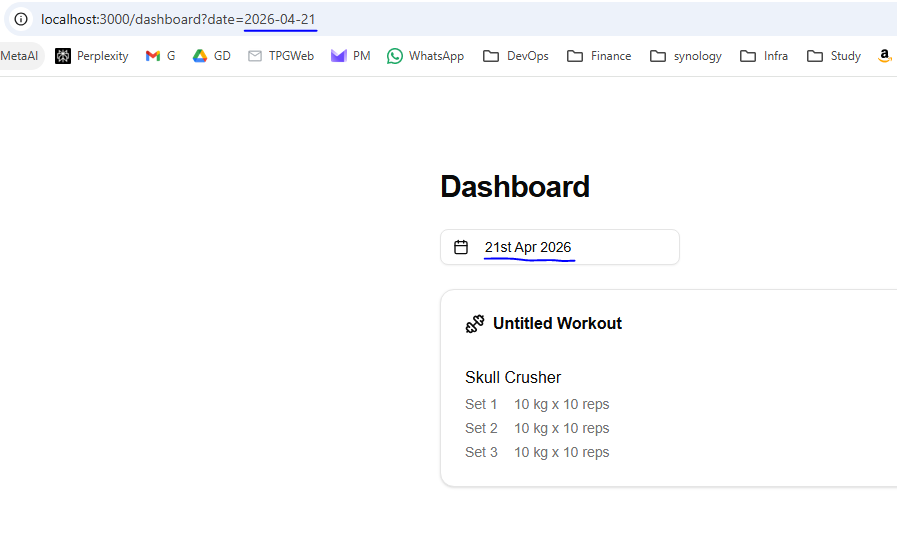
The symptom: clicking a date in the calendar consistently selected the previous day. Clicking the 25th showed the 24th in the URL. The data loaded correctly when the date was typed manually, which ruled out the data layer.
The cause: Date objects created in the browser include the local timezone offset. When serialised and parsed on the server, the offset was being lost, shifting the date back by the UTC difference. This is a well-known JavaScript timezone trap — and identifying it required knowing that the issue was at the client/server boundary, not in the calendar component itself.
Once the root cause was named, Claude implemented the fix correctly. But the diagnosis — knowing where to look and why the boundary mattered — came from the developer.
The Productivity Model
| Claude handles | Developer must own |
|---|---|
| Boilerplate: layouts, forms, routes, schema files | Architectural decisions: what pattern to use and why |
| Repetitive patterns: adding a new page following established conventions | Constraint documents: defining what is and isn't allowed |
| Debugging: implementing a fix once the cause is identified | Root cause identification: especially at system boundaries |
| Refactoring: updating multiple files to follow a new rule | Knowing when something is wrong: catching mistakes before they become patterns |
| Documentation: generating handover docs from a well-structured codebase | Reviewing generated output: Claude does not flag its own errors |
The division in the table is not a limitation on what Claude can do — it is a description of where human judgement is irreplaceable. Claude executes reliably within defined boundaries; the developer defines the boundaries.
The final session — generating the full client handover document from a review of the entire codebase — was possible precisely because the architecture was clean and the standards had held. A codebase with drift, inconsistent patterns, and undocumented decisions produces a document that reflects the drift. Garbage in, garbage out.
Architecture knowledge is not something Claude can replace — it is the input that makes AI-assisted development reliable. The Prompt Log shows how these principles played out across all twelve build phases, with the exact prompts used at each stage and the reasoning behind each decision.